How are damages calculated in a personal injury case in California when someone else’s carelessness leaves you hurt or grieving? Insurance companies and courts look at your bills, your lost income, and the pain the injury caused, then combine those figures into a number meant to make you whole again.
If you or someone you love was hurt because another person or company acted carelessly, reaching out to a California personal injury attorney for a free consultation can help you understand what your specific losses might be worth before you sign anything with an insurance adjuster.
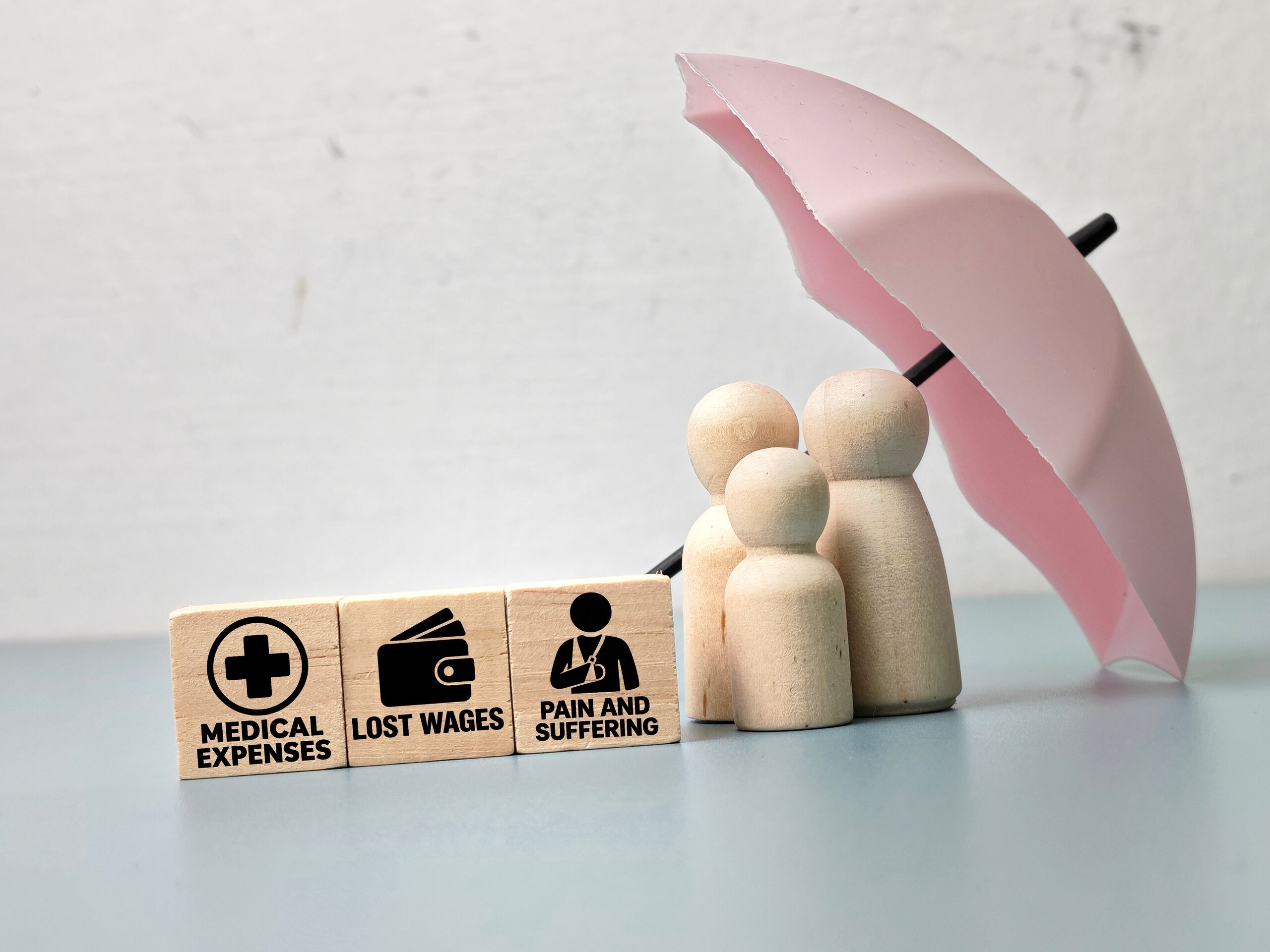
California courts and insurance adjusters calculate compensation by adding up economic losses, such as medical bills and lost wages, and then assigning a dollar value to non-economic harm, such as pain and suffering.
A fair settlement reflects both the paperwork behind your losses and the real impact the injury had on your life.
Damages in a California injury case cover every measurable and immeasurable way an accident cost you. Insurance companies and courts sort them into categories before adding them up, and knowing the categories helps you spot what you might be leaving on the table.
The types of damages in a California personal injury claim generally split into economic, non-economic, and, in rare cases, punitive awards.
Economic damages reimburse you for losses you can prove with a receipt, bill, or pay stub. These include past and future medical expenses, lost wages, reduced earning capacity if your injury affects your ability to work long term, and property damage such as a totaled vehicle.
Adjusters typically want itemized invoices and employer statements before they’ll accept these figures, so keeping organized records from day one makes this part of your claim far more straightforward.
Non-economic damages compensate for harm that doesn’t come with a price tag attached, like pain, emotional distress, loss of enjoyment of life, and disfigurement. Unlike medical bills, these losses don’t have a receipt behind them, so insurers rely on formulas and comparable case data to estimate a number.
Someone who tore a ligament and missed two weeks of work will see a different valuation than someone who suffered permanent nerve damage, even if their medical bills look similar on paper.
Punitive damages apply in California only when the defendant acted with malice, oppression, or fraud, not simple carelessness. A driver who ran a red light while texting typically won’t trigger punitive damages, but a driver who fled the scene after drinking heavily might.
Courts award these damages separately from compensatory damages, and they exist to punish the wrongdoer rather than reimburse the injured person, so most personal injury cases never involve them.
Adjusters and attorneys calculate damages by starting with your documented losses, then layering in a valuation method for pain and suffering.
Two methods dominate this process in California, and comparative negligence can adjust the final number up or down depending on who caused the accident.
The multiplier method values pain and suffering by multiplying your total economic damages by a number, usually between 1.5 and 5, based on injury severity. A broken wrist that heals in eight weeks might warrant a multiplier near 1.5, while a spinal injury requiring lifelong care could justify a multiplier closer to 5.
This approach forms the backbone of most California pain and suffering calculation discussions between attorneys and insurance adjusters, though the exact multiplier remains negotiable and depends heavily on medical evidence and how the injury affects daily life.
The per diem method assigns a daily dollar value to your pain and suffering, then multiplies that figure by the number of days you experienced the injury’s effects. Attorneys sometimes tie the daily rate to a person’s daily wage as a benchmark, arguing that a day in pain deserves at least as much value as a day of work.
This method tends to appear more often in cases with a clear recovery timeline, since it requires a defined end date to calculate a total.
Comparative negligence reduces your compensation by the percentage of fault a jury or adjuster assigns to you. If you’re found 20 percent at fault for a car accident and your total damages equal 100,000 dollars, your recovery drops to 80,000 dollars.
California follows a pure comparative negligence system, so you can still recover damages even if you’re found 90 percent at fault, though your award shrinks accordingly. This rule makes fault investigation one of the most contested parts of calculating a personal injury settlement in California.
Several details beyond the basic formulas push a settlement number higher or lower, and insurance companies weigh these factors long before an attorney sees the file.
Medical records affect settlement value by either supporting or undermining the connection between the accident and your injuries. Gaps in treatment, missed appointments, or inconsistent symptom descriptions give adjusters a reason to argue your injury wasn’t as serious as claimed.
Steady treatment, clear diagnostic imaging, and a physician who documents how the injury limits daily activities all strengthen the file. Insurers read these records closely, so consistency between what you tell your doctor and what you tell the adjuster matters.
Insurance policy limits cap what an insurer will pay regardless of how much your damages actually total. A driver with only 15,000 dollars in bodily injury coverage can’t pay out 200,000 dollars in damages from their own pocket unless you pursue their personal assets, which rarely happens.
When damages exceed available coverage, options include your own underinsured motorist policy or identifying additional defendants who share liability.
This is one reason attorneys request policy declarations early in a case, since the number on paper sets a ceiling long before pain and suffering gets factored in.
Organized records and consistent documentation give a damages claim its strongest foundation. Insurance adjusters respond to evidence, not assumptions, so the more clearly your losses connect to the accident, the harder your claim is to dismiss or undervalue.
Keeping copies of medical bills, prescription receipts, and mileage logs for appointments creates a paper trail that supports the financial side of your claim. Pay stubs or employer statements showing missed work help establish lost income with real numbers behind them.
Writing down how the injury affects sleep, mobility, or family responsibilities on a regular basis gives your attorney specific details to draw on later. Photos showing visible injuries as they heal can also help illustrate the recovery timeline.
Bringing this information to an attorney consultation allows for a more complete evaluation of what your case may be worth.
An attorney matters because insurance adjusters are trained to minimize payouts, and the math behind pain and suffering leaves plenty of room for lowball offers. A knowledgeable attorney knows which multiplier ranges apply to similar injuries in California courts and can push back when an adjuster offers a number that doesn’t match the medical evidence.
Attorneys also identify damages people miss on their own, like future medical costs tied to a permanent injury or lost earning capacity from a career change forced by the accident. Insurance companies negotiate every day, and a skilled advocate levels that imbalance so the number reflects your actual losses rather than what’s convenient for the insurer’s bottom line.
California law generally gives you two years from the date of injury to file a personal injury lawsuit, though claims against government entities require a claim filed within six months. Missing this window typically bars you from recovering compensation entirely, so confirming your deadline early protects your options.
Compensation for physical injuries is usually not taxable under federal or California law, though portions allocated to lost wages or punitive damages may be treated differently. A tax professional can review your specific settlement breakdown for details that apply to your situation.
A quick settlement offer often arrives before the full extent of your injuries becomes clear, and accepting it typically closes your claim permanently, even if you need more treatment later. Reviewing an offer with an attorney before signing anything helps confirm the number accounts for your complete medical picture.
Settlement timelines vary widely, ranging from a few months for straightforward claims to over a year for cases involving serious injuries or disputed liability. Cases that require extensive medical treatment often take longer because attorneys typically wait until you reach maximum medical improvement before finalizing a demand.
Yes, California’s pure comparative negligence rule allows you to recover damages even if you share fault for the accident, though your compensation gets reduced by your percentage of responsibility. This makes a thorough investigation into how the accident happened especially valuable for protecting your recovery.
If someone else’s negligence left you injured or took a loved one from your family, you don’t have to figure out what your claim is worth on your own.
We review the medical records, the insurance policy limits, and the details of what happened, then build a case that reflects the full weight of what you’ve lost.
Call us at 747-241-8288 for a free consultation, and let’s talk through what comes next.
Glotzer & Leib LLP:
1023 N. Hollywood Way Suite 202
Burbank, CA 91505
Joshua W. Glotzer is a Super Lawyers-recognized personal injury attorney and Managing Partner at Glotzer & Leib, LLP. With over 25 years of experience and multiple seven-figure recoveries, he handles complex cases involving car accidents, slip and falls, and elder abuse. Known for his personalized, results-driven approach, Glotzer ensures every client receives the skilled representation they deserve.

“Mr. Glotzer represented me after I was involved in a car accident. I was badly injured,but the insurance company refused to offer me a reasonable settlement. I decided to find an attorney and decided to hire Josh.
His law firm did a great job on my case. They were very responsive to all my questions and obtained a great resolution for me. I received way more money than was originally offered. I would recommend their firm to friends and family.”
“Mr. Josh Glotzer is a great attorney. Over the last 15 years he has helped me on a number of cases with professionalism, and more importantly a positive outcome in my favor. I have referred him to a number of friends and colleagues, all of which have been equally as happy with his legal representation. I trust him and confident in legal ability. I highly recommend his law firm.”
“Don’t try to deal with insurance companies on your own. They strung me along for almost two years before I gave the case to Glotzer & Leib. Josh and his team quickly obtained a settlement that netted me many times what the insurance company was offering. Thank You!”
“My wife was in a car accident last year and Josh did an amazing job representing her. It’s very refreshing to see someone in his profession that actually cares and puts his clients first. He’s the best in the business and I feel so fortunate that I was referred to him. Keep up the great work and thanks for everything you did for my family!”
“I was in a rear end car accident last year and hired Mr. Glotzer’s office. It wasn’t a big case but their office helped me with my property damage claim and did a good job resolving the injury portion of the case as well.”
Helpful information, news about the firm and latest updates
September 30th, 2026
California law mandates that every motorcyclist and passenger must wear a legal helmet at all times when riding on public roads. If an unexpected crash occurring on a co...
September 29th, 2026
In California, canine attacks cause severe physical harm and heavy financial pressure for victims every single year. When a bite occurs, many victims want to know which ...
September 9th, 2026
Losing a loved one or getting hurt because of someone else's carelessness brings a wave of practical questions, and one of the biggest is whether shared blame kills a cl...